News/Blogs
Why Lowest Net Cost Wins: The Power of a Biosimilar-First Strategy
For years, rebate guarantees were often treated as the clearest indicator of savings. But today, that approach is becoming less reliable—and in many cases, misleading.
As biosimilars gain traction and manufacturers adjust pricing strategies, the traditional rebate model is losing its ability to accurately reflect true cost. Here’s why relying on rebate size alone can be misleading:
- Proposals may look similar, but are based on different underlying assumptions
- Rebate size can obscure true net spend, which is what ultimately matters
Employers should focus less on rebate size and more on net cost. That’s where our Biosimilar Advantage Formulary℠ comes in.
Why Rebates No Longer Tell the Full Story
The growing presence of biosimilars is one of the biggest drivers behind this shift. Unlike traditional brand drugs, which often carry high list prices paired with large rebates, biosimilars typically enter the market with significantly lower upfront costs and smaller rebate opportunities. While that’s a positive development for overall affordability, it introduces complexity when comparing PBM proposals.
Some PBMs give rebate credits for biosimilars; others exclude them from rebate guarantees. Manufacturers have also cut list prices, which lowers rebate dollars. As a result, rebate totals may drop, but overall pharmacy costs often improve.
For employers and consultants, rebate guarantees alone are no longer a reliable measure of value, as net costs can vary significantly even when rebate amounts appear similar.
A Formulary Built for Today’s Market
Rather than following a rebate-driven model, our Biosimilar Advantage Formulary takes a deliberate, value-based approach to formulary design.
At its core, this biosimilar first strategy accelerates the adoption of biosimilars by:
- Positioning them as preferred options
- Excluding higher-cost reference brands when appropriate
- Limiting access to legacy brands and newer “follow-on” products that carry higher costs without added clinical value (especially in high-impact categories like immunology)
This approach not only drives immediate savings but also helps prevent product hopping, a common industry practice where manufacturers shift utilization to newer, higher-cost therapies once biosimilar competition emerges. By addressing this proactively, the formulary ensures that cost-saving opportunities are fully realized and sustained over time.
Importantly, flexibility remains a key component. While exclusions are applied where they make sense, there is always a clear medical necessity pathway for the rare cases where a specific brand is clinically required. This protects patient care while delivering savings.
The Financial Impact of Biosimilars
The value of a biosimilar-first approach is not theoretical—it is measurable and happening today. For example:
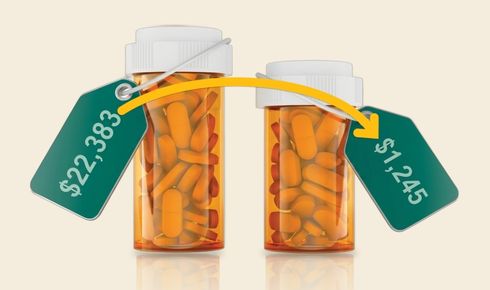
- Biosimilars are often priced up to 90% lower than reference products
- Savings benefit both the plan and members
Across our book of business, biosimilar utilization is delivering average savings of approximately $5,700 per claim, with some cases reaching nearly $10,000. For high-cost therapies like Humira® and Stelara®, even a small number of conversions can result in substantial annual savings. In one example, transitioning just a few members to biosimilars uncovered more than $400,000 in annual savings.
These results are further enhanced through our partnership with Waltz Health, which optimizes where and how specialty medications are dispensed. By combining formulary strategy with intelligent pharmacy routing, clients have seen:
- An average 14% reduction in specialty spend
- Improved member access
- Faster therapy initiation
A Better Experience for Employers and Members
Our approach doesn’t just improve financial outcomes — it creates a more predictable and sustainable pharmacy benefit overall. For employers, the advantages include:
- Reduced reliance on volatile rebate structures
- Greater budgeting clarity
- Upfront, measurable savings instead of waiting months for rebate reconciliation
Members also benefit. Lower-cost drugs mean lower out-of-pocket costs and fewer barriers. Biosimilars provide needed therapies without the strain of high specialty drug prices.
At the same time, brokers and consultants benefit from a clearer, more transparent value story. Rather than navigating complex rebate comparisons, they can focus on outcomes that matter to their clients — total cost, access, and long-term sustainability.
The Bottom Line on Biosimilar First Strategy
The biosimilars pipeline continues to expand, with new options entering the market across multiple high-cost categories. As this trend accelerates, the opportunity to reduce specialty drug spend will only grow.
Rebates matter, but the true measure of success is total cost of care and how effectively it’s managed over time.
Prioritizing lowest net cost and biosimilars helps employers and payors build a more valuable, sustainable pharmacy strategy.
Interested in the Biosimilar Advantage Formulary?
Reach out today to learn more about a biosimilar-first strategy.
About Serve You Rx®
Serve You Rx is a full-service pharmacy benefit manager (PBM) with unquestionable flexibility and an unwavering commitment to doing what’s best for its clients. With a fervent focus on those it serves, including insurance brokers, consultants, third-party administrators, and their clients, Serve You Rx delivers exceptional service and tailored, cost-effective benefit solutions. Independent and privately held for nearly 40 years, Serve You Rx can implement new groups in 30 days or less and say “yes” to a wide variety of viable solutions. Known for its adaptability, quality, and client-centricity, Serve You Rx aims to be a benchmark for better client service.