News/Blogs
Understanding the Changing Rebate Landscape: Why Lowest Net Cost Matters More Than Ever
Over the past year, several market shifts have fundamentally changed how rebates are structured, measured, and compared across pharmacy benefit managers (PBMs). At the same time, employers, brokers, and consultants are being asked to evaluate pricing proposals that may look similar on the surface but are built on very different assumptions underneath.
Understanding what’s changing and what questions to ask can help you make more confident decisions about pharmacy benefit strategy.
More importantly, it highlights why strategies focused on the lowest net cost — not rebate size — are becoming essential.
The Traditional Rebate Model: Why Transparency Matters
In many traditional contracts, rebate guarantees are fixed amounts. The PBM agrees to pay a certain rebate per claim but may retain any additional dollars above that amount. If manufacturer rebates increase over time, those gains may not flow back to the plan sponsor unless the contract is renegotiated.
Traditional PBMs retain an unknown percentage of manufacturer rebates, and opaque pricing models can leave plan sponsors with limited visibility into how the money is spent. These rebate models are losing popularity and are not aligned with the industry trend toward transparency.
Today, many organizations are reevaluating whether their contracts reflect current market conditions — and whether their rebate dollars are being fully returned.
Why Rebates Are Getting More Complicated
Beyond contract structure, several industry dynamics are adding new layers of complexity.
1. Biosimilars Are Disrupting Traditional Rebate Economics
Historically, higher-cost brand drugs generated large rebates. Biosimilars, by contrast, typically have lower list prices and smaller rebates. That creates a challenge when comparing PBM proposals:
- Some PBMs apply “rebate credits” when biosimilars are used instead of higher-rebate reference products.
- Others exclude biosimilars entirely from rebate calculations.
- Guarantees may look higher or lower depending on how drugs are categorized.
The result? Two proposals may yield very different rebate numbers even if total net costs are similar.
This is one reason rebate comparisons alone are becoming less reliable indicators of overall savings.
2. List Price Reductions Are Changing the Math
Several manufacturers have recently reduced wholesale acquisition cost (WAC) prices on certain drugs. While lower prices are good news for plan sponsors, they also reduce or eliminate rebate dollars tied to those products.
That means you may see:
- Lower rebate payments
- Lower pharmacy costs at the counter
- Confusion when comparing year-over-year rebate totals
In many cases, total spend is decreasing even as rebates decline.
3. Drug Classification Can Affect Reported Rebates
Another emerging factor is how drugs are categorized. For example, whether they are considered specialty or non-specialty for pricing purposes.
Changing the classification does not necessarily change the total rebate dollars, but it can affect how those dollars are reported. Understanding the assumptions behind the numbers is becoming more important than ever.
Moving Beyond Rebates: Focusing on Lowest Net Cost
As rebate structures evolve, many employers are shifting their focus toward net cost and total value rather than rebate size alone.
That includes strategies that prioritize:
- Lower upfront pricing
- Clinically appropriate alternatives
- Sustainable long-term savings
- Predictable pharmacy costs
This shift is especially important in specialty pharmacy, where high-cost therapies drive the majority of overall spend.
A Different Approach: Pass-Through Transparency
Serve You Rx primarily operates under a pass-through model, meaning:
- 100% of rebates received are returned to the client.
- Pricing is based on transparent administrative fees rather than retained margins.
- Improvements in rebate contracts flow directly back to plan sponsors.
This structure aligns incentives to lower total drug spend rather than maximize rebate volume.
Validated for Contract Transparency
Serve You Rx’s contract transparency has been independently validated by the Validation Institute. In January 2025, Serve You Rx earned this designation after a rigorous third-party review of its pass-through contract. The Validation Institute confirmed that Serve You Rx’s contracts are clear, transparent, and meet strict standards for integrity and client data access.
As a validated, privately held PBM, Serve You Rx is committed to contract clarity and client confidence in our solutions.
The Biosimilar Advantage: A Strategy Built for Today’s Market
While the rebate landscape continues to shift, Serve You Rx has already developed a solution designed to deliver savings regardless of rebate volatility.
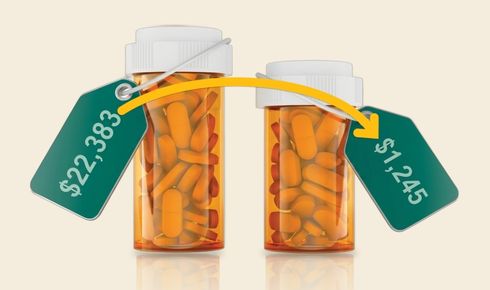
Serve You Rx’s Biosimilar Advantage Formulary℠ prioritizes the lowest-net-cost medications rather than those with the largest rebates.
By accelerating biosimilar adoption and strategically excluding higher-cost reference products when appropriate, this approach delivers immediate financial impact while maintaining clinical appropriateness.
The Biosimilar Advantage Formulary℠ changes the conversation:
Instead of chasing rebates, it focuses on value.
Why This Matters for Employers and Members
Because biosimilars often carry lower list prices, savings are realized upfront rather than dependent on rebate reconciliation months later.
That creates meaningful advantages:
- Lower overall drug spend
- Reduced reliance on rebate dollars
- More predictable pharmacy costs for employers
- Greater affordability at the member level
- Sustainable long-term cost management
In a market where rebate structures are becoming more complex and less predictable, a lowest-net-cost strategy provides stability.
What Plan Sponsors Should Be Asking Now
Given how quickly the landscape is shifting, this is a good time to revisit key questions:
- When was our PBM contract last evaluated?
- Are we receiving 100% of rebates?
- How are biosimilars handled in our formulary?
- Are rebate guarantees aligned with current market dynamics?
- What is our net cost trend — not just our rebate total?
The answers can reveal meaningful opportunities for improvement.
Looking Ahead
The pharmacy market will continue to evolve, and rebate structures will likely keep changing alongside drug pricing and manufacturer strategies.
Organizations that focus on transparency, flexibility, and lowest net cost will be better positioned to adapt — regardless of how rebates shift in the future.
Ultimately, the goal isn’t bigger rebates. It’s better outcomes, smarter spending, and a pharmacy strategy that works for you.
Give your clients the insights they want.
Fill out the form below, and discover the Serve You Rx difference.
About Serve You Rx®
Serve You Rx is a full-service pharmacy benefit manager (PBM) with unquestionable flexibility and an unwavering commitment to doing what’s best for its clients. With a fervent focus on those it serves, including insurance brokers, consultants, third-party administrators, and their clients, Serve You Rx delivers exceptional service and tailored, cost-effective benefit solutions. Independent and privately held for nearly 40 years, Serve You Rx can implement new groups in 30 days or less and say “yes” to a wide variety of viable solutions. Known for its adaptability, quality, and client-centricity, Serve You Rx aims to be a benchmark for better client service.